
Special Offer: Call to Ask about Wholesale Prices 

A Natural Way to Seal and Strengthen Your Pond

How sodium bentonite works to seal soil and retain water in ponds

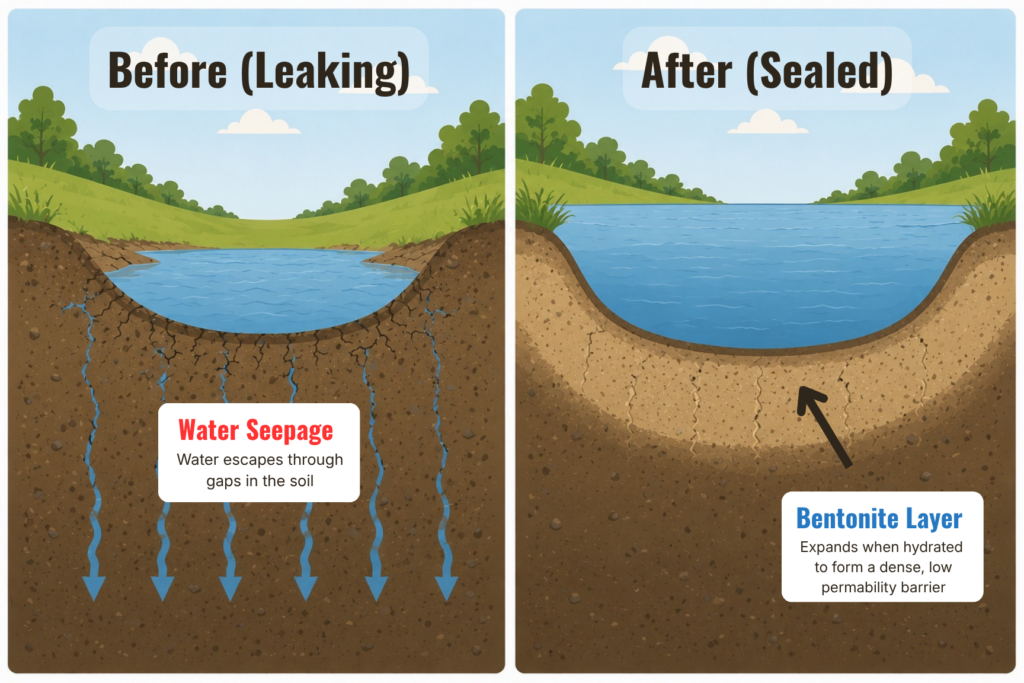
Whether you’re building a new pond or trying to fix one that won’t hold water, it all comes down to one thing: the soil must be properly sealed. Sodium bentonite works by transforming loose, porous soil into a dense, low-permeability barrier. When it comes into contact with water, it expands and fills the spaces between soil particles, creating a natural seal that prevents water from escaping.

Explore our products to find
the best fit for your pond.

Our Products

This ability to swell and form a tight barrier is what makes bentonite one of the most effective materials for pond sealing.

Commonly Used Bentonite Application Methods

No two ponds are exactly the same. By understanding your soil type, pond size, and overall goals, we can help you choose the right material and method so you get the performance you expect from your pond.

  • Pure Blanket Method

    Best for new construction
    Applied across the pond bottom to create a sealing layer before or during construction. This method works well for new ponds or full rebuilds, forming a compacted barrier that helps prevent water from seeping through the soil.
  • Mixed Blanket Method

    Best for variable soil conditions
    Blended into the top layer of soil to improve water retention throughout the pond structure. Often used when soil conditions vary, this method creates a more uniform seal by combining bentonite directly with the existing ground.
  • Broadcast Method

    Best for existing ponds
    Spread over the surface of an existing pond to help reduce water loss. This method is typically used when draining isn’t practical, allowing the material to settle and improve sealing gradually over time.

Not sure what application is right for your pond?

Give Us A Call

Symptoms of a Leaky Pond
and Why It Happens

The most recognizable signs of a leaking pond include:

  • Water levels dropping faster than expected
  • Constant need to refill
  • Wet or soft ground around the dam
  • Cattails or unusual vegetation
  • Cracks during dry conditions

Leaks in ponds usually occur because of problems in one of the following areas:

  • Soil Conditions: Sandy or coarse soils allow water to pass through.
  • Drying and Cracking: Soil can shrink and break the seal.
  • Construction Factors: Poor compaction or lack of a proper clay layer.
  • Natural Wear Over Time: Roots, burrowing animals, and erosion can weaken the seal.

Real Pond Transformations

Real pond sealing projects using Texas Sodium Bentonite.